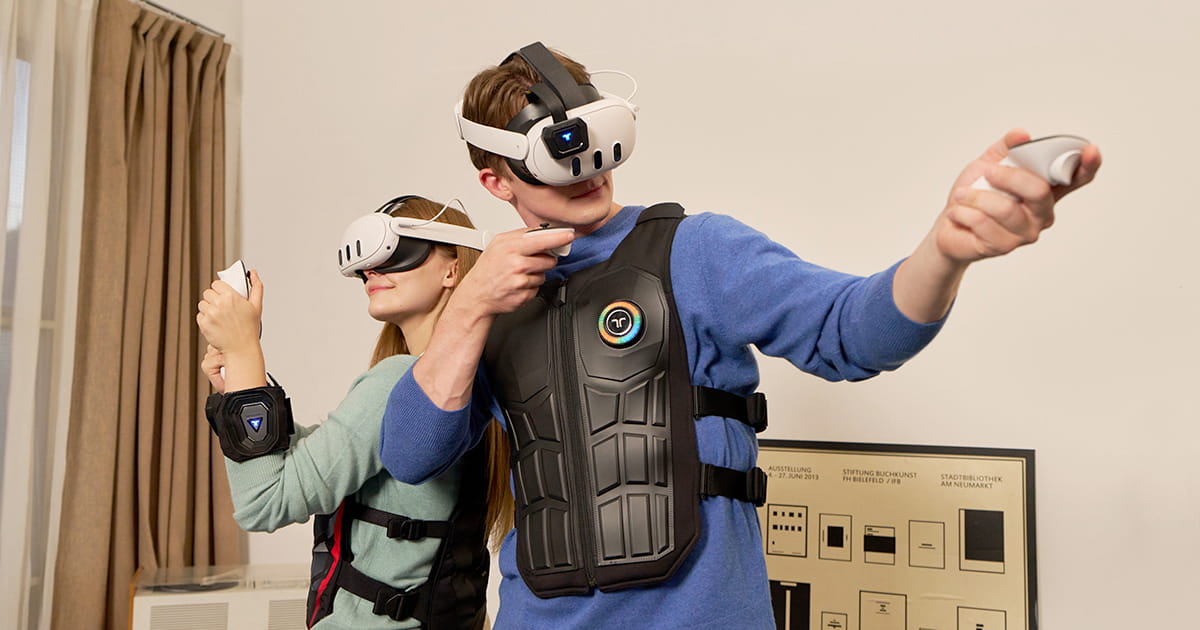
Haptic Feedback Suits: Feel VR Like Never Before
For years, the promise of virtual reality (VR) has captivated our imaginations, offering stunning visual and auditory experiences that transport us to digital worlds. Yet, a crucial sense has remained largely untapped, leaving a subtle but significant gap in true immersion: the sense of touch. Imagine not just seeing a virtual raindrop, but feeling its cool patter on your skin. Or not just witnessing a punch, but experiencing its impact. This is no longer the stuff of science fiction; it's the thrilling reality brought forth by the advent of the haptic feedback bodysuit.
These revolutionary wearable technologies are designed to bridge the physical and virtual divide, translating in-game actions and environmental details into realistic tactile sensations across your entire body. By doing so, they elevate immersion to an unprecedented level, allowing you to not just observe virtual worlds, but to truly inhabit and interact with them on a visceral level.
The Revolution of Haptic Feedback Bodysuits in VR
A haptic feedback bodysuit is more than just a peripheral; it's a second skin, intricately designed to provide a comprehensive array of physical sensations within virtual and augmented reality environments. Unlike basic rumble packs or controllers that offer generalized vibrations, these advanced suits utilize sophisticated technologies like electro muscle stimulation (EMS) to deliver precise, localized, and varied feedback. This means you can differentiate between the gentle caress of a breeze, the sharp jolt of an impact, or the coarse texture of a virtual object.
The core principle lies in recreating the sense of touch, transforming passive viewing into active participation. When you encounter a virtual wall, you don't just see it; you feel the bump. When a character delivers a punch, you experience the force. This remarkable capability is achieved through an array of haptic points distributed across the suit, each capable of delivering electrical impulses or other forms of tactile feedback that stimulate your muscles and skin. Companies like Teslasuit have been at the forefront, showcasing technology that can mimic everything from a prickly rain shower to the growing waves of static, making virtual worlds palpably real. The vision of Wade Watts in "Ready Player One" slipping into his suit to fully engage with the OASIS is no longer a distant fantasy; it’s a rapidly evolving reality, with cutting-edge VR haptic suits poised to redefine how we experience digital realities.
Beyond Gaming: Expanding the Horizons of Haptic Suit Applications
While the immediate appeal of a haptic feedback bodysuit for gaming is undeniable – feeling every bullet, punch, blast, and even a virtual hug – its potential extends far beyond entertainment. These suits are poised to revolutionize various sectors by enhancing realism and engagement:
- Professional Training and Simulation: Imagine firefighters training in virtual burning buildings, feeling the heat and the impact of debris, or surgeons practicing complex procedures with realistic tactile feedback. Military personnel can undergo highly realistic combat simulations, experiencing environmental stressors and impacts without actual danger.
- Medical Rehabilitation and Therapy: For patients recovering from injuries or neurological conditions, haptic suits could offer controlled sensory stimulation, aiding in motor skill recovery or addressing sensory deficits. Feeling textures, temperatures, or pressure in a controlled virtual environment could be a game-changer.
- Design and Engineering: Engineers could virtually "touch" and manipulate prototypes, feeling the texture, weight, and resistance of virtual components before physical fabrication, streamlining the design process.
- Virtual Tourism and Exploration: Experience the true chill of an Arctic landscape, the warmth of a desert sun, or the sensation of ancient ruins beneath your fingertips, all from the comfort of your home.
- Remote Work and Collaboration: While still nascent, the potential for virtual handshakes or even more complex tactile interactions in remote meetings could foster deeper connections and understanding.
Furthermore, suits like the Teslasuit integrate biometric sensors, monitoring vital data signals such as heartbeat, perspiration, and other stress indicators. This capability opens doors for advanced health and performance data analysis, allowing for personalized experiences that adapt to your physiological state, or providing critical insights for athletes and professionals.
Unpacking the Technology: How Haptic Feedback Suits Deliver Sensation
The magic behind a haptic feedback bodysuit lies in its sophisticated internal mechanisms, moving far beyond simple vibrating motors to deliver a spectrum of realistic sensations. At its core, many advanced suits leverage:
- Electro Muscle Stimulation (EMS): This is where modern haptic suits truly differentiate themselves. Instead of just vibrating, EMS technology sends targeted electrical impulses to the muscles, mimicking natural sensory inputs. Companies like OWO Game, with their OWO Skin, have perfected this, stating their system recreates sensations with "scientific precision." This allows users to feel subtle nuances like wind, energy tension, or the specific impact of a bullet, a punch, or even the feeling of a hug, rather than just a generalized buzz. This leap in technology allows for a greater variety of sensations and a higher degree of realism. For a deeper dive into this technology, explore Muscle Stimulation Haptics: Beyond Vibration in VR Suits.
- High-Density Haptic Points: The number and distribution of individual haptic points across a suit significantly impact the fidelity and precision of sensations. Suits like the Shockwave boast up to 80 haptic points, strategically placed to cover a wide area of the body. A higher number of these points means the suit can simulate different types of touch, pressure, and vibrations with greater accuracy, making the virtual environment feel much more convincing and localized. For instance, you could feel a breeze on your arm, while simultaneously feeling an impact on your chest.
- Motion Capture and Biometrics: Many advanced haptic bodysuits integrate with motion capture systems, allowing your real-world movements to be accurately mirrored in the virtual environment. This seamless integration enhances immersion, as your digital avatar reacts precisely to your physical actions. Beyond movement, some suits, like the Teslasuit, also incorporate biometric sensors. These sensors can monitor physiological responses such as heart rate, perspiration, and stress levels. This data can be used to personalize the haptic experience, adjusting intensity based on user feedback or even providing valuable insights for performance analysis in training scenarios.
Choosing Your Haptic Feedback Bodysuit: What to Look For
As the market for immersive technology expands, selecting the right haptic feedback bodysuit becomes crucial. Here are key factors to consider to ensure you get the most out of your investment:
- Comfort and Ergonomics: You'll be wearing this suit for extended periods, especially during intense gaming sessions or training. Look for lightweight, breathable materials that prevent overheating and allow for unrestricted movement. Some suits, like the Shockwave, offer versatility, allowing you to wear them as a full suit or just a jacket for personalized comfort.
- Connectivity and Freedom of Movement: Wireless connectivity is paramount for an untethered VR experience. Bluetooth integration, as offered by the Shockwave Haptic Suit, ensures a clutter-free setup and allows you to move naturally and freely within your play space without worrying about snagged cables.
- Compatibility with Your Ecosystem: Ensure the suit is compatible with your existing VR headset, gaming platform, and favorite titles. Leading brands often list supported games, with some, like OWO Game, explicitly mentioning compatibility with popular titles like Ghosts of Tabor, Assassin’s Creed Mirage, and Fortnite.
- Precision and Variety of Sensations: This is where the core value lies. Investigate the number of haptic points and the technology used (e.g., EMS versus simple vibration motors). A higher number of points and advanced stimulation methods translate to a richer, more detailed, and realistic range of sensations—from subtle environmental effects to powerful impacts.
- Customization and Safety: The ability to adapt the intensity of sensations to your preferences is vital for a personalized and safe experience. Good haptic suits allow users to tailor the feedback levels to their comfort, ensuring immersion without discomfort.
- Durability and Build Quality: Especially for gamers, the suit needs to withstand intense and dynamic use. Look for robust construction that promises longevity.
- Integrated Features: Consider if the suit offers additional functionalities such as full-body tracking integration, which allows your real-world movements to be accurately mirrored in VR, or biometric feedback for performance monitoring and adaptive experiences.
- Cost-Effectiveness: While cutting-edge technology can be expensive, some products, like the Shockwave, aim to offer high-quality experiences (e.g., 80 haptic points) at a more accessible price point, making advanced immersion available to a broader audience.
The journey into truly immersive virtual worlds is accelerating, and the haptic feedback bodysuit is a cornerstone of this evolution. By adding the sense of touch, these innovative wearables transform VR from a visual and auditory spectacle into a full-body experience. Whether for gaming, professional training, or therapeutic applications, the ability to feel every nuance of a virtual environment is opening up exciting new possibilities, pushing the boundaries of what we thought was possible in digital realms.