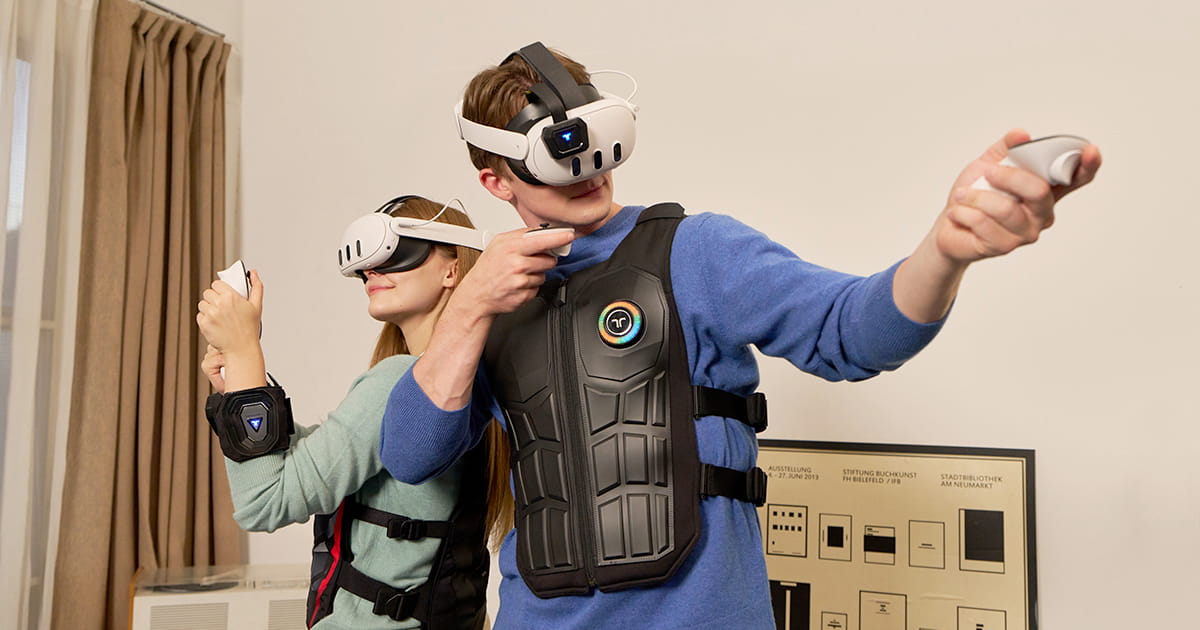
VR Haptic Suits: Feel Every Punch, Raindrop & Breeze
Imagine stepping into a virtual world and not just seeing and hearing it, but truly feeling it. The gentle caress of a breeze on your skin, the jarring impact of a punch, the subtle texture of a virtual object – this is the promise of the haptic feedback bodysuit. Moving far beyond simple rumble controllers, these innovative suits are revolutionizing immersion, bringing a tactile dimension to virtual reality (VR) and augmented reality (AR) that was once confined to science fiction novels like Ready Player One.
For years, VR experiences have been primarily visual and auditory. While stunning graphics and immersive soundscapes transport our minds, our bodies remain stubbornly tethered to the real world. A haptic feedback bodysuit shatters that barrier, employing sophisticated technology to translate digital sensations into physical ones. This isn't just about gaming; it's about training, therapy, design, and a whole new frontier of human-computer interaction. From professional simulations to heart-pounding gaming sessions, the ability to feel the virtual environment transforms passive observation into active participation.
The Science Behind the Sensation: How Haptic Suits Work
At the core of a modern haptic feedback bodysuit lies a groundbreaking departure from traditional vibration motors. Instead, these advanced suits utilize technologies like electro muscle stimulation (EMS) and electro-tactile haptic feedback to create a vast array of realistic sensations. Unlike the generalized buzzing of a game controller, EMS haptics deliver targeted electrical impulses to specific muscle groups, mimicking everything from blunt impacts to subtle pressure, tension, or even the feeling of wind.
Companies like OWO Game, with their OWO Skin, have perfected this muscle stimulation technique, allowing users to feel the precise sensation of a bullet impact, a powerful blast, or even the warmth of a virtual hug with scientific precision. This isn't just about turning vibrations on and off; it's about recreating complex physical interactions with nuanced electrical signals.
The Teslasuit, another pioneer in this space, employs electro-tactile haptic feedback across its full-body design. This technology can replicate the prickly patter of raindrops, the growing waves of static electricity, or the distinct feeling of bumping into a virtual wall. The key lies in a high number of strategically placed "haptic points" distributed across the suit. For instance, some suits boast up to 80 haptic points, allowing for incredibly precise and varied sensations that truly make the virtual environment feel alive and responsive. This granularity enables a far richer tactile experience than ever before, moving Muscle Stimulation Haptics: Beyond Vibration in VR Suits to a whole new level.
Beyond touch, many advanced haptic suits integrate other vital systems. Motion capture technology records and tracks the user's body position and movements, creating a seamless digital representation in the virtual space. This means your physical movements are accurately mirrored, enhancing the sense of presence. Furthermore, biometric systems often monitor vital data signals such as heartbeat, perspiration, and other stress indicators. This not only adds another layer of personalized feedback but also enables advanced health and performance data analysis, opening doors for applications far beyond entertainment.
Beyond Gaming: Multifaceted Applications of Haptic Feedback Bodysuits
While the allure of feeling every bullet and blast in your favorite VR game is undeniable – and companies like OWO Game proudly tout compatibility with popular titles like *Ghosts of Tabor*, *Assassin’s Creed Mirage*, and *Fortnite* – the potential uses of a haptic feedback bodysuit stretch far beyond the realm of entertainment.
- Immersive Gaming: This is arguably the most immediate and exciting application. Imagine dodging bullets and feeling the wind resistance, experiencing the recoil of a virtual weapon, or even the gentle brush of leaves as you explore an alien world. Suits like Shockwave are designed with gamers in mind, offering lightweight, breathable materials for long sessions and a high number of haptic points to bring every in-game action to life.
- Professional Training & Simulation: For industries where real-world training is hazardous or costly, haptic suits offer an invaluable solution. Surgeons can practice complex procedures feeling tissue resistance; pilots can experience turbulence and G-forces; and first responders can undergo realistic disaster simulations, feeling the heat of a virtual fire or the impact of debris. The ability to practice high-stakes scenarios with accurate physical feedback in a safe, repeatable environment is transformative.
- Rehabilitation & Therapy: In the medical field, haptic feedback bodysuits can aid in physical therapy and rehabilitation. Patients can engage in guided exercises, receiving tactile cues and gentle resistance to improve motor skills and muscle memory. The immersive nature of VR, combined with haptic feedback, can make therapy more engaging and effective, potentially accelerating recovery.
- Design & Engineering: Engineers and designers can "feel" their virtual prototypes. Imagine evaluating the ergonomics of a new car interior, the texture of a product, or the stress points of a virtual structure. This tactile feedback during the design phase can lead to more intuitive and robust creations.
- Artistic & Creative Expression: Artists can explore new dimensions of interaction, allowing audiences to feel their creations or even participating in immersive, multi-sensory performances. The boundaries of storytelling and experience design are fundamentally redefined when touch becomes a medium.
The integration of biometrics, as seen in the Teslasuit, further amplifies these applications. Monitoring vital signs during training can provide critical insights into performance under stress, while in gaming, it could dynamically adjust difficulty or even influence narrative paths based on the player's emotional state.
Choosing Your Haptic Feedback Bodysuit: What to Look For
As the market for haptic feedback bodysuit technology grows, choosing the right one can seem daunting. Here are some key factors to consider to ensure you invest in a suit that meets your needs and enhances your virtual experiences:
- Method of Haptic Feedback: Understand the difference between vibration-based suits and those utilizing electro muscle stimulation (EMS) or electro-tactile feedback. EMS often provides a more precise, localized, and varied range of sensations, mimicking everything from impacts and tension to wind and texture. If deep immersion is your goal, prioritize suits with advanced haptic technologies.
- Haptic Point Density & Precision: More haptic points generally mean more detailed and localized sensations. A suit with 80 haptic points, like some models of the Shockwave, can deliver a significantly richer tactile experience than one with fewer. Consider where these points are distributed on the suit and if they cover the areas most important for your intended use (e.g., torso for gaming impacts, full body for environmental sensations).
- Comfort and Fit: This is paramount, especially for long gaming sessions or professional training. Look for suits made from lightweight, breathable, and flexible materials. Features like adaptability (e.g., wearing as a full suit or just a jacket) and personalized intensity adjustments (like OWO's safe, tailored experience) contribute significantly to comfort and user satisfaction.
- Connectivity & Portability: Wireless connectivity, typically via Bluetooth, offers unparalleled freedom of movement and a clutter-free setup. If you plan to move around extensively in VR, ensure the suit integrates seamlessly with full-body tracking systems.
- Compatibility: Verify that the haptic suit is compatible with your existing VR/AR headset, PC, and the specific games or applications you intend to use. Some suits might have a broader range of supported titles than others.
- Additional Features: Do you need motion capture integration? Are biometric sensors important for your applications, whether for performance analysis or personal health insights? These advanced features can significantly add to the suit's value but also its cost.
- Cost-Effectiveness: While advanced haptic suits can be an investment, weigh the features against the price. Some newer entrants, like Shockwave, are aiming to offer high-quality experiences with a significant number of haptic points at a more accessible price point. Remember, the true value lies in the depth of immersion and utility it provides. For a deeper dive into how these suits are transforming experiences, check out Haptic Feedback Suits: Feel VR Like Never Before.
The future of VR is tactile, and the haptic feedback bodysuit is the key to unlocking it. No longer are we passive observers of virtual worlds; we are active participants, capable of feeling the subtle nuances and powerful impacts that bridge the gap between digital and physical. As technology continues to evolve, these suits will become more sophisticated, affordable, and widespread, paving the way for unprecedented levels of immersion in gaming, training, therapy, and beyond. The dream of truly experiencing virtual reality with all our senses is no longer a distant fantasy—it's here, and it feels incredible.