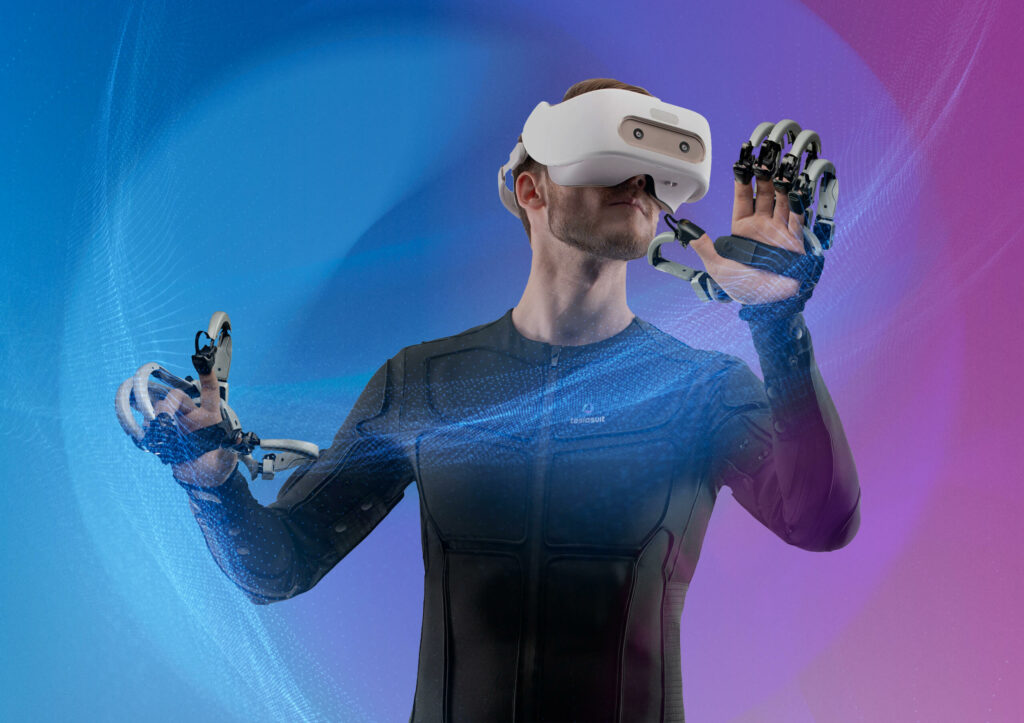
The quest for ultimate immersion in virtual reality has long been a driving force for technological innovation. While stunning visuals and immersive audio have become increasingly sophisticated, the sense of touch, or haptics, has often lagged behind. Traditional haptic feedback, typically relying on simple vibrations, offers a limited palette of sensations. However, a revolutionary shift is underway with the advent of muscle stimulation haptics, propelling the haptic feedback bodysuit beyond mere buzzing into a realm of truly realistic and nuanced tactile experiences. This advanced technology promises to redefine how we interact with virtual worlds, allowing us to not just see and hear, but genuinely feel every aspect of our digital environments.
The Evolution of Touch: From Vibration to Electromyostimulation
For years, haptic feedback in VR and gaming was synonymous with vibration. Controllers would rumble, and early haptic vests offered basic buzzing sensations to mimic impacts or environmental effects. While these systems provided a rudimentary sense of feedback, they often fell short in conveying the subtle complexities of touch. The uniform nature of vibration made it challenging to differentiate between a gentle breeze, a soft touch, or the sharp impact of a bullet. The level of immersion was inherently capped by this technological limitation.
Enter electro-tactile haptic feedback, or electromyostimulation (EMS), which represents a monumental leap forward. Instead of simply vibrating, advanced haptic feedback bodysuits like the Teslasuit and OWO Skin utilize precisely controlled electrical impulses to stimulate the user's muscles. This innovative approach allows for the recreation of a far broader spectrum of sensations, mimicking how our bodies naturally perceive touch, pressure, tension, and even environmental factors. Imagine feeling the distinct pressure of bumping into a virtual wall, the subtle texture of an object in your hand, or the precise impact of a punch, all delivered through targeted muscle contractions rather than generic buzzing.
Companies like OWO Game, with their "second skin" technology, explicitly emphasize this departure from vibration, promising to translate in-game actions into real sensations through muscle stimulation. This means experiencing the powerful recoil of a weapon, the gentle flutter of wind, or the tense feeling of a grapple with remarkable precision. This nuanced approach allows virtual worlds to truly come alive, adding a layer of authenticity that was previously unimaginable. To truly grasp the scope of these advancements, explore more about how Haptic Feedback Suits: Feel VR Like Never Before are changing the game.
Unpacking the Haptic Feedback Bodysuit: Key Technologies and Features
A cutting-edge haptic feedback bodysuit is far more than just a wearable vest; it's a sophisticated system integrating multiple technologies to create a seamless, immersive experience. Understanding these core components is key to appreciating their transformative potential:
- Advanced Haptic Feedback System (Muscle Stimulation): At the heart of these suits is the ability to deliver precise, localized sensations through electro-tactile feedback. Devices like the Shockwave Haptic Suit boast up to 80 haptic points, distributed strategically across the body. This high density allows for incredibly detailed and varied sensations, from the prickle of raindrops to the growing waves of static, or the specific impact of a bullet striking your arm versus your chest. The intensity can often be adapted to individual preferences, ensuring a safe and personalized experience.
- Motion Capture System: To truly feel present in a virtual world, your digital avatar must perfectly mirror your physical movements. Integrated motion capture systems record and track body position and movements, creating a digital representation that moves in real-time with you. This synergy means your physical actions directly influence your virtual presence, enhancing the feeling of embodiment and connection.
- Biometry System: Taking immersion a step further, some advanced suits incorporate biometric sensors. The Teslasuit, for example, can monitor vital data signals such as heartbeat, perspiration, and other stress indicators. This not only enables advanced health and performance data analysis for users but also opens the door for adaptive VR experiences. Imagine a game environment subtly changing based on your real-time emotional state, or a training simulation adjusting difficulty as your stress levels rise.
- Comfort and Design: For long gaming sessions or extended use in professional applications, comfort is paramount. Modern haptic suits are designed with lightweight, breathable materials. Many, like the Shockwave Haptic Suit, offer modularity, allowing users to wear it as a full suit or just a jacket, adapting to comfort and specific activity needs. The "second skin" philosophy, as seen with OWO, emphasizes a snug yet unrestrictive fit that moves with your body.
- Wireless Connectivity: Freedom of movement is crucial in VR. Most modern haptic feedback bodysuits connect wirelessly via Bluetooth, eliminating clutter and allowing users to move naturally without feeling tethered.
- Broad Compatibility: For gamers, compatibility with popular titles is non-negotiable. Leading suits strive for seamless integration with a wide range of top games, from action-packed shooters to immersive open-world adventures.
Beyond Gaming: The Diverse Applications of Advanced Haptics
While gaming remains a significant driver for haptic feedback bodysuit technology, the precision and realism offered by muscle stimulation open doors to a myriad of applications far beyond entertainment:
- Professional Training and Simulation:
- Military and Law Enforcement: Realistic combat training, simulating environmental hazards, and tactical scenarios where feeling impacts and environmental cues can be critical for skill development and decision-making under pressure.
- Medical and Surgical Training: Allowing aspiring surgeons to "feel" the resistance of tissue during virtual operations, or providing haptic feedback for complex medical procedures, enhancing dexterity and precision before working on real patients.
- Industrial and Occupational Safety: Training for operating heavy machinery, simulating hazardous environments, or practicing emergency procedures where tactile feedback about equipment status or potential dangers can prevent real-world accidents.
- Healthcare and Rehabilitation:
- Physical Therapy: Providing guided haptic feedback for rehabilitation exercises, assisting patients in regaining motor skills by giving them tactile cues for correct movement patterns.
- Pain Management: Exploring non-pharmacological approaches to pain relief by delivering specific sensory stimuli that can distract or alleviate discomfort.
- Creative and Design Industries:
- Product Prototyping: Designers can virtually "touch" and manipulate 3D models, feeling textures, weight, and resistance before physical prototypes are created, streamlining the design process.
- Art and Sculpture: Artists can sculpt in a virtual space, receiving haptic feedback that simulates the feel of clay, stone, or other materials, enhancing their creative workflow.
- Location-Based Entertainment and Experiential Marketing:
- Theme parks and VR arcades can offer highly immersive experiences where guests truly feel part of the narrative, whether it's the rumble of a rollercoaster or the impact of a fantastical creature.
These diverse applications underscore the transformative potential of advanced haptics. By enabling users to feel virtual environments with unprecedented realism, these suits are not just enhancing entertainment but also revolutionizing how we learn, train, and interact with digital information. The ability for VR Haptic Suits: Feel Every Punch, Raindrop & Breeze is proving invaluable across a multitude of sectors.
Choosing Your Haptic Feedback Bodysuit: What to Consider
As the market for haptic feedback bodysuits expands, making the right choice requires careful consideration. Here are key factors to guide your decision:
- Type of Haptic Technology: Prioritize suits that utilize muscle stimulation (electro-tactile feedback) over simple vibration. This distinction is crucial for superior realism and a broader range of sensations.
- Number and Distribution of Haptic Points: More haptic points generally translate to greater precision and realism in sensation delivery. A suit with 80 points, like the Shockwave, will offer a more nuanced experience than one with fewer. Consider how these points are distributed across the body – full-body coverage offers the most comprehensive immersion.
- Comfort and Fit: Look for lightweight, breathable materials that allow for extended wear without discomfort. Adjustable sizing and modular designs (e.g., full suit vs. jacket) enhance versatility and user comfort.
- Wireless Connectivity: Ensure the suit offers stable, low-latency wireless connectivity (like Bluetooth) for unrestricted movement and a seamless experience.
- Game and Platform Compatibility: Verify that the suit is compatible with your preferred VR headset, gaming platform, and a good selection of your favorite titles. Broad compatibility ensures you get the most out of your investment.
- Biometric Integration: If health tracking, performance analysis, or adaptive experiences are important to you, consider suits with integrated biometric sensors.
- Durability and Build Quality: Especially for intensive gaming or professional use, a robust and well-constructed suit will offer greater longevity.
- Price vs. Features: While advanced technology often comes with a higher price tag, evaluate the features offered against the cost. Some newer entrants, like the Shockwave Haptic Suit, aim to provide high-quality haptics at a more accessible price point, democratizing this cutting-edge immersion.
The advent of muscle stimulation haptics is unequivocally transforming the landscape of virtual reality. The haptic feedback bodysuit, evolving from rudimentary vibration to sophisticated electro-tactile feedback, now offers an unparalleled level of immersion that engages the sense of touch with astonishing realism. Whether for gaming, professional training, or even healthcare, these suits are pushing the boundaries of what's possible, allowing users to truly feel present in digital worlds. As this technology continues to refine and become more accessible, we stand on the cusp of an era where virtual experiences are virtually indistinguishable from reality, making the once-futuristic vision of full-body immersion a tangible reality for an ever-growing audience.